

 LEO Satellite Communications Empower the Oil and Gas Industry, Establishing Reliable Energy Data Transmission Links

The Challenge
Remote Oil and Gas Operations Require More Reliable Data Transmission
Oil and gas production operations cover extensive geographical areas. Some production facilities and monitoring points are located in remote regions, where terrestrial communication network coverage and connectivity are limited.
As the oil and gas industry continues to advance its digitalization and intelligent transformation, sensors and data acquisition terminals at production sites continuously are generating large volumes of operational data, placing higher demands on transmission stability, low-latency data backhaul, communication continuity, and environmental adaptability.
How to provide reliable and stable data transmission links for on-site data acquisition terminals in complex and remote oil and gas production environments has become a critical foundation for advancing the digitalization of oil and gas operations.
The Solution
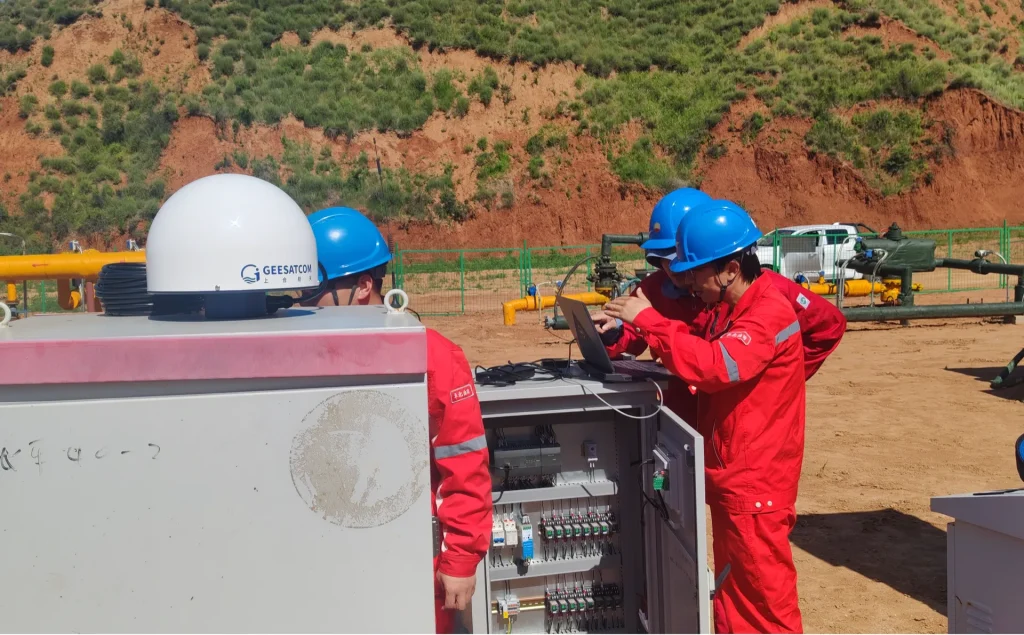
LEO Satellite Communications Connect Oil and Gas Production Sites with Operations Platforms
Geespace and China National Petroleum Corporation (CNPC) jointly established the CNPC × Geespace Joint Laboratory for LEO Satellite Constellation IoT Applications. By integrating resources in LEO satellite constellation operations, oil and gas industry application scenarios, and satellite terminal R&D, the joint laboratory aims to promote the application of LEO satellite communication technology across the entire oil and gas value chain.
LEO satellite IoT application tests were conducted at two major oilfields in China. Sensor data collected by on-site data acquisition terminals was transmitted through LEO satellite communication links using satellite communication terminals (Geespace DTU) and uploaded to CNPC’s integrated communications, navigation, and remote sensing platform. This enabled continuous transmission of oil and gas production data, equipment operating data, and other relevant information.
Field Testing at Domestic Oilfields
Geespace DTU was connected to on-site data acquisition terminals via serial ports. Multidimensional production data collected by sensors was transmitted through LEO satellite communication links to the oilfield operations center platform at preset intervals, enabling scheduled monitoring and visualized management of oil and gas production data.
During the project tests, data transmission was conducted at two-minute intervals, with 4 data packets transmitted each time. The tests verified the communication quality of the LEO satellite communication links, including latency and transmission success rates, as well as the stability and performance of the satellite communication terminals.
The Impact
Low-Latency, Highly Reliable Data Transmission Supports the Digitalization of Oil and Gas Production
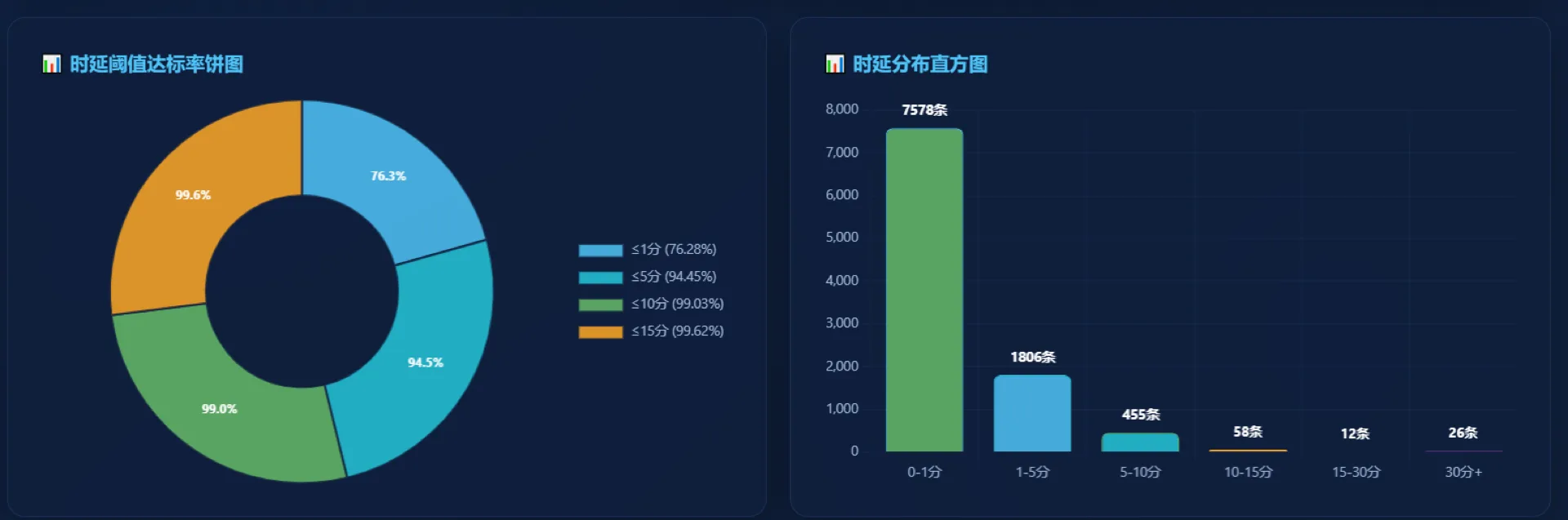
During the testing period from April to August 2026, the project completed transmission validation of production-related operational data from oil and gas production wells, distributing room for water injection, and other operational sites via LEO satellite communication links.
Low-Latency Data Transmission Performance
- 5% of data transmissions achieved latency of 5 minutes or less.
- 99% of data transmissions achieved latency of 10 minutes or less.
Reliable and Stable Data Transmission
- Continuous operational data transmission tests were conducted at two-minute and five-minute intervals.
- The data transmission success rate exceeded 99%.
LEO satellite communications have emerged as a new data transmission solution for remote oil and gas production scenarios, enhancing communications support for production data transmission in challenging environments. They provide essential connectivity for oilfield production monitoring, data acquisition, and digital management.
This application further demonstrates the potential of LEO satellite IoT technology in the energy sector and provides a practical example of the integration of the commercial aerospace industry with traditional energy industries.

